When selecting a premium surface material for your kitchen, bathroom, or commercial project, the choice between quartzite vs. marble often comes down to one fundamental question: Do you prioritize durability or aesthetics? The answer isn’t simple — both materials excel in different ways, and understanding their distinct advantages helps you make the right decision for your specific needs.
At Omni Surfaces, we work with fabricators, designers, and builders who demand surfaces that perform as beautifully as they look. This guide breaks down the key differences between quartzite and marble so you can choose with confidence.
What Is Quartzite?
Quartzite is a natural metamorphic rock formed when sandstone undergoes intense heat and pressure deep within the earth. The result? A non-porous, incredibly hard surface composed primarily of quartz crystals.
Key characteristics:
- Hardness rating: 7 on the Mohs scale (diamond is 10)
- Porosity: Non-porous; resists staining without sealing
- Composition: 99% quartz + feldspar and mica minerals
- Appearance: Subtle veining, often with a crystalline sparkle
Quartzite’s hardness makes it naturally resistant to scratches, heat, and acidic substances — a major advantage in high-traffic kitchens and commercial spaces.
What Is Marble?
Marble is a metamorphic rock formed from limestone that has been subjected to heat and pressure. It’s primarily composed of calcium carbonate, which gives it its signature elegant appearance and softer, more luxurious feel.
Key characteristics:
- Hardness rating: 3–4 on the Mohs scale (softer than quartzite)
- Porosity: Porous; requires regular sealing to prevent staining
- Composition: Calcium carbonate with trace minerals
- Appearance: Bold, dramatic veining; luxurious aesthetic
Marble’s softer composition makes it more susceptible to etching (acid damage) and staining, but its unmatched visual beauty makes it the material of choice for high-end residential and design-forward projects.
Durability: Quartzite Wins
This is where quartzite’s superior hardness shines. On the Mohs hardness scale, quartzite ranks at 7, while marble ranks at 3–4. That means quartzite is 2–3 times harder than marble.
What this means in practice:
- Scratch resistance: Quartzite resists scratches from knives, pots, and everyday wear. Marble scratches easily and shows wear over time.
- Heat resistance: Quartzite handles hot pans and cookware without damage. Marble can develop thermal shock and cracking.
- Acid resistance: Quartzite resists lemon juice, vinegar, and wine. Marble etches instantly when exposed to acidic substances, leaving dull spots.
- Stain resistance: Quartzite’s non-porous structure prevents liquids from penetrating. Marble absorbs liquids and stains permanently without immediate sealing.
For kitchens, bathrooms, and high-traffic commercial spaces, quartzite is the more practical choice.
Aesthetics: Marble Takes the Crown
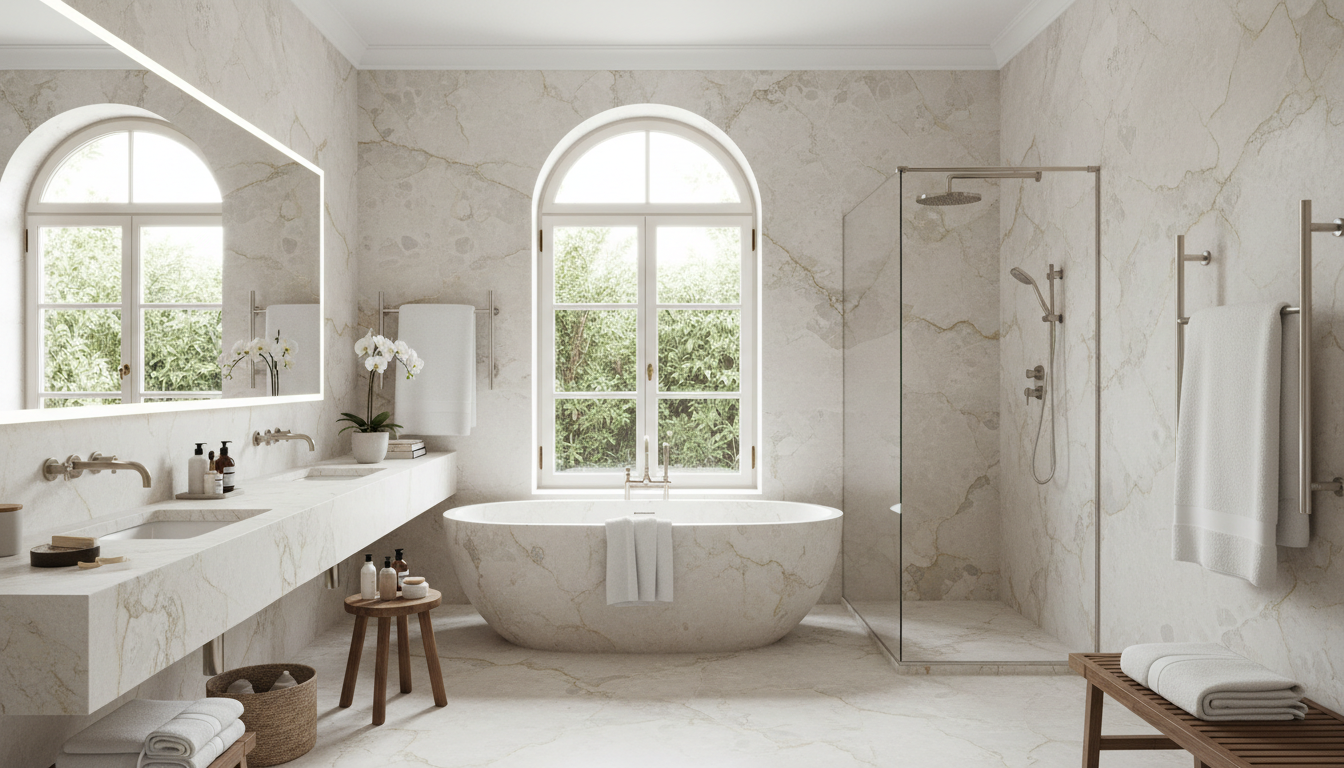
While quartzite offers superior durability, marble delivers unmatched visual luxury. The bold, flowing veining patterns in marble create a sense of elegance and timelessness that quartzite cannot replicate.
Marble’s aesthetic advantages:
- Dramatic veining: Each slab is unique, with intricate patterns that tell a geological story
- Luxurious feel: Marble’s soft, cool surface feels premium to the touch
- Color range: Available in whites, blacks, grays, greens, and rare hues like pink and gold
- Design versatility: Works in classic, contemporary, and transitional spaces
Quartzite offers subtle beauty — a refined sparkle and gentle veining — but lacks marble’s showstopping presence. If visual impact is your priority, marble is the winner.
Maintenance: Quartzite Requires Less Work
Quartzite’s non-porous nature means minimal maintenance. A simple wipe-down with mild soap and water is usually sufficient. You don’t need to seal quartzite regularly, saving time and money over the years.
Marble demands more attention. It requires:
- Regular sealing (every 6–12 months, depending on usage)
- Immediate cleanup of spills to prevent staining
- Avoiding acidic cleaners — use pH-neutral products only
- Gentle handling to prevent scratches and etching
For busy kitchens and commercial projects, quartzite’s low-maintenance profile is a significant advantage.
Which Material Should You Choose?
Choose quartzite if:
- You prioritize durability and low maintenance
- Your project includes a busy kitchen or high-traffic commercial space
- You want a surface that resists staining and etching
- You prefer minimal upkeep over the years
- You’re building for resale value and practical functionality
Choose marble if:
- You prioritize visual luxury and dramatic aesthetics
- Your project is a luxury residential space where durability is secondary
- You’re willing to invest in regular sealing and careful maintenance
- You want a statement-making, one-of-a-kind surface
- Design impact matters more than practical durability
Consider a hybrid approach: Many designers recommend using marble in lower-traffic areas (bathrooms, entryways, accent walls) and quartzite in high-traffic zones (kitchen islands, main countertops). This balances luxury with practicality.
The Omni Surfaces Advantage
Whether you choose quartzite or marble, sourcing the right material from a trusted supplier makes all the difference. At Omni Surfaces, we offer:
- Curated collections of premium quartzite and marble from around the world
- Technical expertise to guide your selection based on project requirements
- Reliable supply chains ensuring consistent availability for large-scale projects
- Fabrication support for custom cuts, finishes, and installations
Ready to Choose Your Surface?
Both quartzite and marble are exceptional materials — the choice depends on your project’s specific demands. If you’re ready to explore options, our team is here to help.
[CTA Button: Browse Our Quartzite & Marble Collections]