A lobby gets one shot at a first impression, and it takes that hit every single day — thousands of footsteps, rolling luggage, delivery carts, humidity walking in the door every time someone opens it. Picking the best stone for commercial lobbies projects actually need isn’t really one decision. It’s three or four decisions stacked on top of each other: flooring versus wall cladding, budget tier, traffic volume, and how the space needs to read the moment someone walks in.
We get pulled into this conversation at every stage of a project, from early schematic design through final material approval, so here’s the breakdown we actually walk architects through — by budget tier, by application, and by what Texas’ climate does to a lobby that a spec sheet won’t tell you.
Why Lobby Specification Is Different
Most interior surfaces get specified once and mostly forgotten. Lobby floors get walked on by everyone who enters the building, every day, in shoes tracking in whatever the weather did that morning. That changes the math on slip resistance, wear patterns, and long-term maintenance in ways that don’t apply to a reception desk or a feature wall.
Dynamic Coefficient of Friction (DCOF) is the number that matters most here, and it’s non-negotiable for lobby flooring in any commercial building carrying foot traffic. A stunning polished marble floor that fails DCOF in a wet-entry condition isn’t a design win — it’s a liability, and it’s one of the fastest ways a beautiful spec gets rejected in review. Wall cladding, by contrast, never touches a foot, so the calculus shifts almost entirely to appearance, weight, and installation method.
Best Stone for Commercial Lobbies, By Project Tier
Budget tier changes the answer more than almost any other variable, so we walk through it that way rather than presenting one universal recommendation.
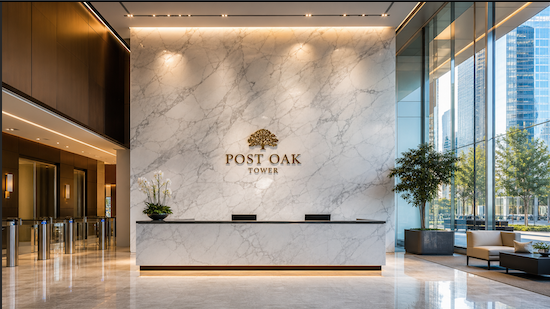
Luxury tier. Natural marble and quartzite earn their place here, but almost never on the floor. Reserve them for reception desks, feature walls, and vertical panels where the veining reads as a statement and foot traffic is zero. Calacatta or Statuario marble on a lobby wall behind a security desk photographs beautifully and never has to survive a DCOF test. For the floor itself in this tier, a honed or leathered quartzite gives you the natural-stone look with meaningfully better slip performance than polished marble.
Class A tier. This is where large-format porcelain earns its keep. Laminam and Ariostea slabs give you the continuous, low-seam look architects want in a lobby without the maintenance profile of natural stone, and the thermal or structured finishes hit DCOF requirements cleanly. It’s also the tier where budget and performance genuinely align — porcelain at this scale reads as premium without carrying natural stone’s sourcing variability.
Value-commercial tier. Engineered quartz and porcelain tile both perform reliably here, with quartz holding a slight edge on perceived quality per square foot. This is rarely the tier where the wow-factor lobby lives, but it’s still worth spec’ing a genuine stone-look surface over a laminate composite — tenants and visitors notice the difference more than budget assumptions usually predict.
Flooring vs. Wall Cladding: Different Rules Apply
It’s worth saying plainly: the best stone for a lobby floor and the best stone for a lobby wall are rarely the same slab, even in the same project. Flooring needs DCOF compliance, resistance to tracked-in grit, and a finish that won’t show wear patterns after a few thousand footsteps a week. Wall cladding needs none of that — it needs to look extraordinary from six feet away and hold up to occasional contact, nothing more.
This is exactly why a single “best stone” answer doesn’t really exist. The honest spec is usually two materials working together: a durable, DCOF-compliant surface underfoot, and a more dramatic, less traffic-tolerant material on the walls where it can do its job without wearing out.
Humid Climate and Traffic Considerations
Texas heat and humidity show up in a lobby spec in ways that are easy to miss on paper. Polished natural stone can become genuinely slick when humidity spikes and someone walks in from a summer rainstorm, which is one more reason DCOF matters more here than in a drier climate. Red clay soil tracked in on shoes is also a real, if unglamorous, factor — lighter, more porous stones show tracking and staining faster than a denser quartzite or a sealed porcelain surface, and it’s worth walking a client through that trade-off before they fall in love with a pale marble floor for a ground-floor entry.
Working With a Local Supplier
Every recommendation above assumes you can actually get the material, in the quantity and lot consistency a lobby-scale project needs. We bring in Laminam, Ariostea, quartzite, and marble directly rather than through a secondary distributor, which means the slab count and finish consistency you see at either Houston showroom is what’s actually available — not a sample chip standing in for a promise. If a feature wall in your lobby calls for continuous veining across multiple panels, our book-matched slabs guide covers how we tag and hold matched lots for exactly that scenario, and our Laminam architect’s guide goes deeper on large-format porcelain specs if that’s the direction the flooring decision is headed. For the fuller material comparison across marble, quartzite, and engineered options, our countertop specification guide is the pillar reference this piece builds on.
Slip resistance standards referenced throughout are consistent with guidance from the Natural Stone Institute, which is worth citing directly in your own specification documentation.
If you’ve got an active lobby project and want to see current slab inventory across tiers, reach out to our design team at either Houston location — we’ll walk the floor-versus-wall decision with you against what’s actually in stock.