Large-format surfaces are rapidly dominating the modern countertop market. While many workshop owners shy away from these materials due to a fear of costly breakage, mastering the art of fabricating porcelain slabs is currently the single biggest revenue opportunity for stone professionals.
By understanding the unique physics of these engineered materials and adapting your shop’s workflow, you can turn a notoriously delicate process into a highly profitable, everyday standard.
Sintered Stone vs. Porcelain: What is the Difference?
To successfully work with these materials, you must first understand what happens to them before they reach your bridge saw.
Classic Porcelain Slabs
Traditional porcelain is a dense blend of natural clay, silica, and feldspar. This mixture is baked in industrial kilns at temperatures soaring past 2,000°F. The extreme heat vitrifies the minerals, resulting in a completely non-porous, glass-like surface.
Sintered Stone
Sintered stone takes this process a step further by mimicking natural metamorphic geology on a speed-run. Manufacturers combine intense heat with immense hydraulic pressure. This dual-force process fuses the raw minerals at a molecular level, creating an entirely new, ultra-dense category of engineered stone.
The “Density Trap”
Do not let easy cutting fool you. Low-grade, mass-produced slabs are often fired at lower temperatures, making them softer and deceptively easy to cut. However, they lack structural integrity and are highly prone to cracking post-installation.
On the other hand, premium brands like Laminam and Atlas Plan are incredibly dense. While they demand more patience and specialized diamond tooling at the saw, they deliver unmatched durability and load-bearing strength for the end consumer.
Best Practices for Cutting Engineered Stone
Because slab manufacturers rarely advertise if their material is lower density, your shop should establish a single, high-level fabrication standard for every engineered slab to mitigate risk.
1. Eliminate Table Vibration
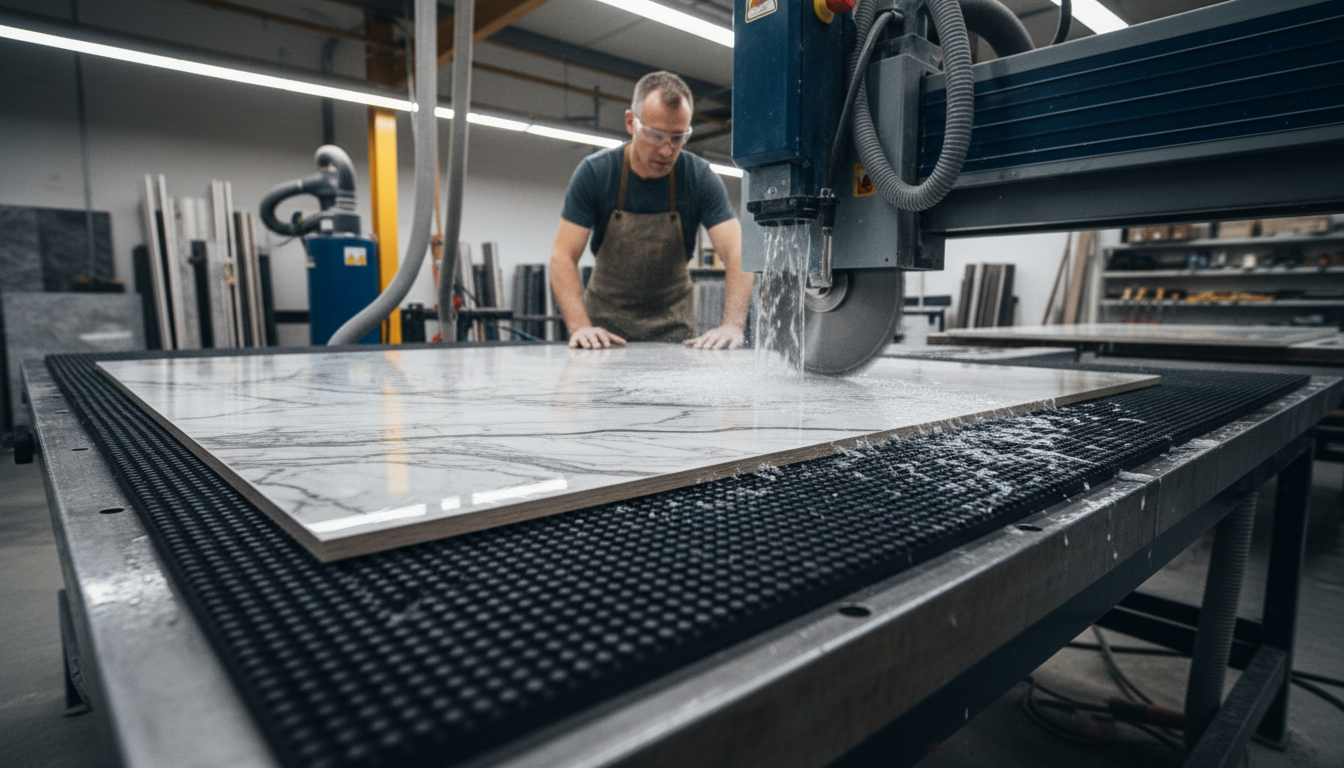
Vibration is the primary cause of hairline fractures during the cutting process. Never place a brittle porcelain slab directly onto an uneven concrete saw bed.
- Lay down a thick, protective rubber horse mat or high-density foam board.
- Use shims to support and level any natural bowing in the slab before starting your cut.
2. Relieve Tension Clockwise
Slabs carry immense internal tension from the manufacturing process. To release this tension safely, always program your saw to cut in a clockwise direction around the outer perimeter, shaving off roughly one inch of material first. Cutting the top and bottom before the sides will almost always result in a split.
3. Master the “Hole-to-Hole” Sink Cutout
When preparing sink cutouts, standard plunge cuts are highly risky. Instead, use a specialized, thin-wall vacuum-brazed or electroplated core bit to drill out all four corners of the cutout first.
By cutting from one pre-drilled hole to the next, you create a natural stop-gap. If a stress crack begins to form during the cut, it will terminate harmlessly in the next drilled hole instead of running wild across your expensive slab.
Safe Handling, Transport, and Installation
More slabs are broken during transport and installation than on the saw bed. To protect your profit margins, you must treat these materials with the same care you would reserve for heavy sheets of glass.
- Apply Structural Backing: Many premium manufacturers now require a peel-and-stick foam board on the underside of the slab to keep the warranty valid. This foam absorbs micro-impacts during transport and provides a superior bonding surface for mitered edges.
- Prevent Deflection: Standard stone clamps allow thin slabs to bend (deflect) when lifted, causing them to snap instantly. Always use wider, specialized thin-panel clamps.
- Invest in Rigid Handling Frames: Ditch homemade wooden frames. Utilize professional, multi-bar aluminum handling grids (such as Omni Cubed, Grabo, or suction-based SmartLift systems) to keep the material perfectly rigid while in the air.
Conclusion
Homeowners actively seek out porcelain and sintered stone because they are completely non-porous, highly scratch-resistant, and immune to freeze-thaw cracking in outdoor kitchens. The demand is permanent. The fabrication shops that invest in the right tooling and master these precise, glass-like handling techniques today are the ones who will name their price tomorrow.