Choosing between quartzite vs marble vs porcelain countertops usually comes down to three practical things: how you’ll use the space, how much maintenance you’re comfortable with, and the look you want every day. All three can feel truly premium—when they’re matched to the right application.
This guide breaks it down in plain language so you can choose confidently for kitchens, bathrooms, bars, and commercial projects.
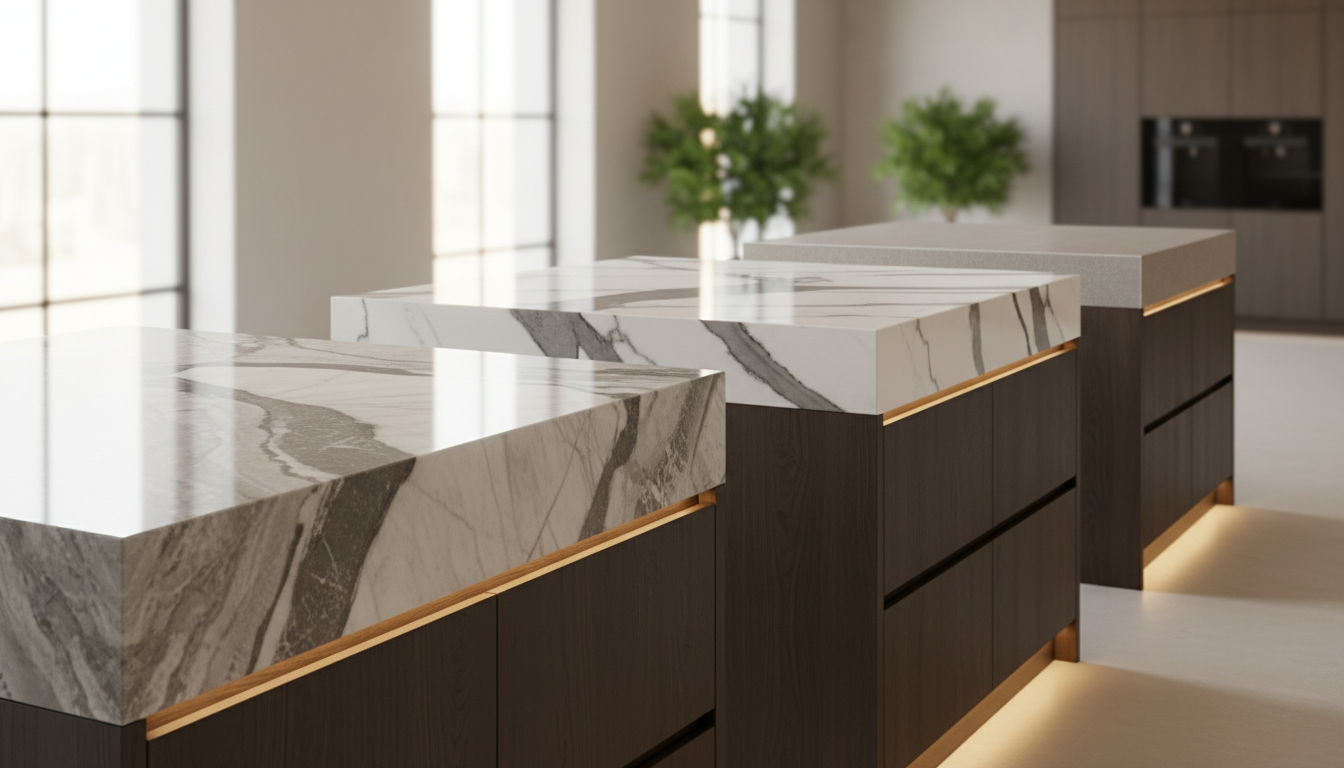
What each material really is (and why it matters)
Quartzite
Quartzite is a natural stone formed under intense heat and pressure. In real-world terms, it’s known for strength, heat tolerance, and natural movement that looks high-end because every slab is unique.
Best when you want:
- A natural-stone look with strong everyday performance
- A surface that handles heat and daily kitchen use well
- That one-of-a-kind slab feel (no “repeat pattern” look)
Marble
Marble is a natural stone loved for its classic veining and warm, timeless character. It’s iconic—but it’s also more reactive to acids (like lemon or vinegar), and it can etch depending on how it’s finished and how it’s used.
Best when you want:
- A timeless luxury look (especially for baths, fireplaces, pastry areas)
- A surface that can develop character over time
- A designer-forward statement that feels elevated instantly
Porcelain (slab)
Porcelain slabs are engineered, kiln-fired surfaces designed to mimic stone, concrete, metal, and more. They’re popular for modern projects because they offer consistent visuals, easy cleaning, and large-format design flexibility.
Best when you want:
- A highly consistent look across multiple areas
- Strong stain/chemical resistance with simple day-to-day care
- Large-format applications (waterfalls, wall cladding, feature panels)
How to decide: the 6 factors that actually matter
1) Durability (chips, scratches, daily wear)
- Quartzite: typically excellent for everyday kitchens.
- Porcelain: excellent surface performance, but edges and fabrication details matter a lot.
- Marble: structurally durable, but more likely to show wear over time (especially in busy kitchens).
If your kitchen is a true workhorse, quartzite or porcelain usually wins.
2) Heat resistance
All three handle normal heat well—but placing a hot pan straight from the oven can be risky for any surface depending on thermal shock, thickness, and installation.
Practical rule:
Use trivets anyway, and make sure your project is specified and installed correctly, especially with large slabs and thin profiles.
3) Stain and acid resistance (coffee, wine, lemon)
- Marble is the most sensitive to acids (higher etching risk).
- Quartzite and porcelain are often easier choices when spills happen fast.
If you love marble for a kitchen, consider:
- Honed finishes (they often hide etching better visually)
- Clear care guidelines for the household/client
- A realistic mindset: patina can be part of the charm
4) Maintenance and sealing
- Marble and quartzite may need sealing, depending on the exact slab and finish.
- Porcelain is generally lower maintenance in daily life.
The key: treat each slab like its own material—even within “marble” or “quartzite,” porosity and behavior can vary.
5) Look: natural movement vs controlled consistency
- Want unique veining and variation? Marble and quartzite are hard to beat.
- Want a repeatable look across a full project (kitchen + baths + feature wall)? Porcelain makes consistency easier.
6) Budget and project logistics (lead times, matching, fabrication)
Cost isn’t only the slab—it also includes:
- Material yield and layout (vein direction, bookmatching goals)
- Fabrication complexity (edges, cutouts, mitered waterfalls)
- Risk tolerance (marble wear expectations vs lifestyle)
For multi-unit or large projects, repeatability and scheduling often push porcelain higher on the list.
Best use cases (quick guidance)
Quartzite tends to shine in:
- Busy kitchens
- Outdoor kitchens (project-dependent; confirm suitability)
- Clients who want natural stone without “high-drama maintenance”
Marble tends to shine in:
- Primary bathrooms and powder rooms
- Fireplaces and feature walls
- Baking/pastry zones (the cool surface is a real benefit)
Porcelain tends to shine in:
- Waterfall islands and modern kitchens
- Full-height backsplash + countertop continuity
- Wall cladding, showers, and commercial feature installations
Common mistakes (and how to avoid them)
- Choosing marble for a high-acid, high-spill kitchen without setting expectations
- Treating all quartzites as identical (they aren’t—verify performance and care)
- Selecting porcelain without aligning early on fabrication capabilities and details (edges, seams, transitions)
A strong supplier + a solid fabrication plan is what turns a “great material” into a great final outcome.
Explore the right surface for your project
If you’re choosing materials for a kitchen, bathroom, or commercial space, Omni Surfaces can help you compare options side-by-side and select what fits both the design and the real-world use.
Explore our collections and talk with our team about availability, application fit, and project timelines.

Closing
Quartzite, marble, and porcelain can all be the “right” choice—it depends on how you want the space to perform and how you want it to look. Start with the use case, align expectations early, and the decision gets much easier.