
The countertop landscape is shifting faster than ever. In 2026, designers are moving beyond traditional choices, embracing materials that blend durability, aesthetics, and sustainability. Whether you’re designing luxury residential projects or high-performance commercial spaces, understanding these trending materials is essential for staying ahead.
At Omni Surfaces, we curate over 20,000 slabs in Houston and maintain a portfolio of 400+ unique colors and finishes. Our team works directly with architects and designers every day, so we see trends emerge firsthand. This guide—built for design professionals—breaks down the top countertop materials of 2026, including technical specifications, aesthetic directions, and practical specification advice.
1. Quartzite: The Luxury Workhorse
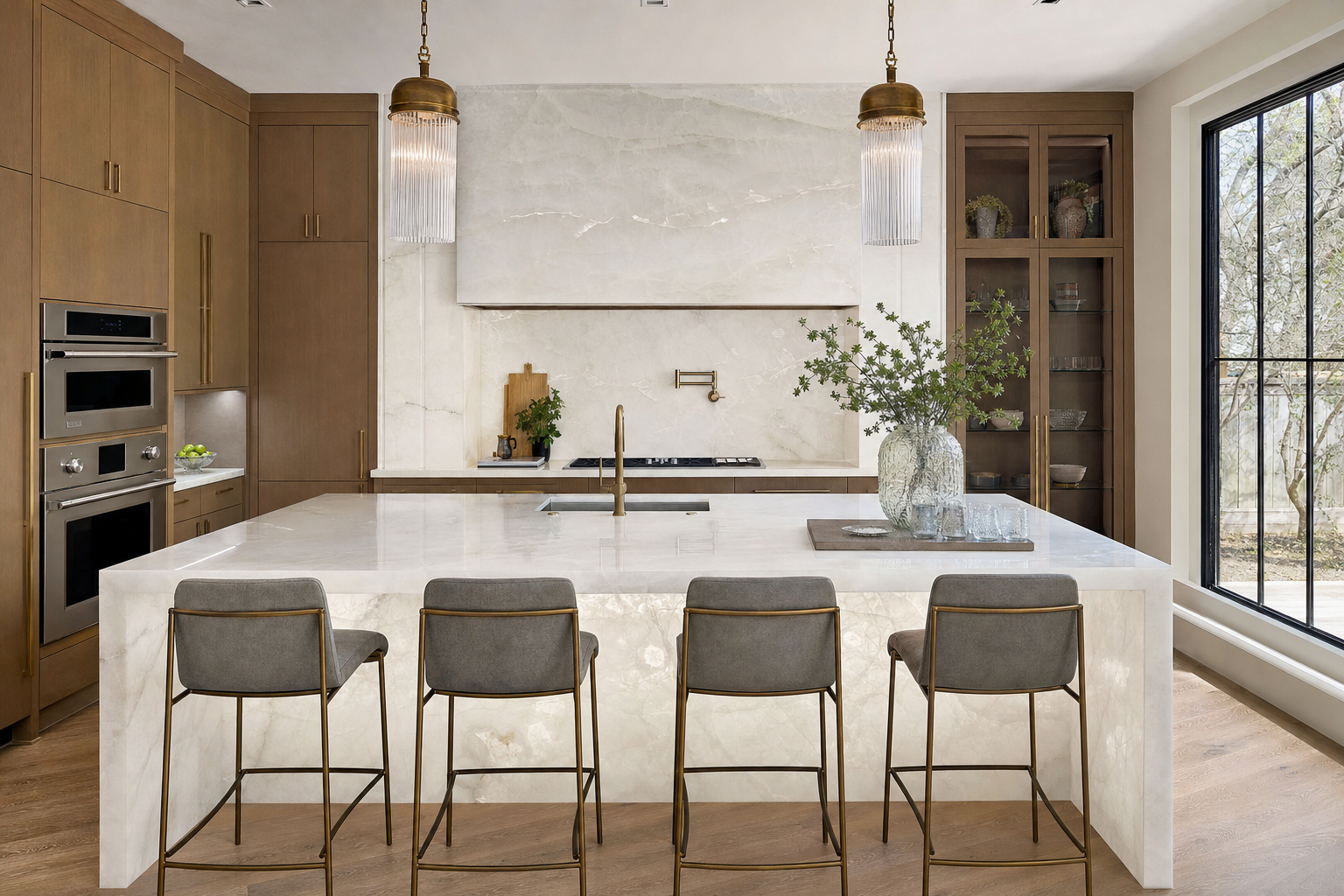
Quartzite continues to dominate the luxury segment in 2026. With a Mohs hardness of 7–8, it resists scratches, heat, and etching better than marble while offering a translucent depth that engineered stone can’t replicate. Designers are specifying quartzite for high-traffic kitchens, spa-like bathrooms, and open-plan islands that function as sculptural centerpieces.
Why Quartzite Beats Granite in 2026
Granite has long been a reliable staple, but quartzite’s superior aesthetics are winning over designers who want a natural stone that feels both timeless and contemporary. Unlike granite’s often busy, speckled patterns, quartzite offers elegant veining comparable to marble—but with far greater durability. The rising availability of Brazilian and Indian quartzites in large-format slabs (up to 130″ × 70″) allows monolithic looks with fewer seams.
Quartzite Design Trends: Colors & Patterns
- White and Soft Neutral Quartzite: Materials like Iceberg Translucent and Super White are trending for their ability to bounce light and expand small spaces. Backlit installations are becoming a signature design move.
- Bold Veining: Waterfall veins that flow vertically from countertop to floor are a 2026 hallmark. Designers favor pattern-matched slabs for dramatic, uninterrupted statements.
- Honed and Leather Finishes: Matte finishes reduce glare and add a tactile quality that feels modern and understated.
Specification Tip: Request physical samples of quartzite before specifying. Natural variation means that digital images can misrepresent color and movement. Omni Surfaces offers a sample request program for designers with active projects.
Visit our quartzite collection and request samples for your next project.
2. Engineered Stone & Quartz: Customization & Performance
Engineered stone—often called quartz—remains the go-to material for commercial and high-use residential applications. In 2026, brands like Caesarstone, Silestone, and Symphony (all available at Omni Surfaces) are pushing boundaries with recycled content, antimicrobial surfaces, and ultra-realistic veining.
Engineered Stone vs Natural Stone: 2026 Comparison
Custom Color Matching for Specific Design Visions
Engineered stone’s greatest advantage is predictability. For projects that demand a specific Pantone or brand color—think hospitality chains or retail environments—manufacturers can match custom hues. In 2026, earth tones like terracotta, sage, and warm taupe are replacing pure white in many residential briefs.
Installation Note: Engineered stone requires professional fabrication to avoid visible seams. Plan seam locations early and specify a color-matched epoxy for invisible joints.
3. Italian & European Marble: Timeless Appeal with Modern Styling
Marble has experienced a resurgence among high-end designers who pair it with contemporary elements. The key is strategic placement: islands, accent walls, and powder rooms rather than entire work surfaces.
Marble Trends in High-End Residential Design
- Calacata Viola Marble: A recent arrival at Omni Surfaces, this Italian stone features dramatic violet-gray veining against a white background. It’s being specified for statement islands and fireplace surrounds.
- Negative Space Drama: Designers use marble sparingly—one vertical slab behind a range, or a cantilevered island top—to create visual impact without overwhelming a space.
- Mixed Materiality: Marble + brass, marble + blackened steel, marble + smoked oak. The interplay of materials defines the 2026 aesthetic.
Marble Maintenance: Transparent Guidance for Designers
Clients often hesitate when they hear “marble requires maintenance.” Being upfront about etching and sealing is the professional approach. Specify marble for low-traffic zones, educate clients on routine care, and recommend sealed and polished finishes for easier cleaning.
4. Porcelain: The Emerging Star
Porcelain slabs have grown from a niche product to a mainstream specification in 2026. Their zero porosity, UV resistance, and ability to mimic stone, wood, and concrete make them incredibly versatile.
Porcelain vs Quartz: Which Trending Material Wins?
Porcelain excels where quartz falls short:
- Outdoor Use: Porcelain withstands freezing, UV, and moisture—ideal for outdoor kitchens and pool surrounds.
- Large Format: Slabs up to 126″ × 63″ reduce seams drastically.
- Thin Profile: 6mm–12mm thickness allows installation over existing surfaces without demolition.
Quartz still wins for indoor durability and scratch resistance. The choice depends on project context.
Porcelain Design Trends 2026
- Terrazzo-Inspired Patterns: Bold chips and flecks add texture to minimalist spaces.
- Concrete Aesthetics: Industrial looks with porcelain’s easy maintenance appeal to commercial designers.
- Wood-Look Porcelain: Plank-format porcelain mimics oak, teak, and walnut without the upkeep.
Specification Consideration: Porcelain requires diamond-tipped blades and trained fabricators. Verify your fabricator’s experience with porcelain before specifying.
5. Sustainable & Locally-Sourced Stone
Client awareness of environmental impact is no longer a niche concern—it’s a mainstream requirement, especially in luxury residential and commercial wellness projects.
How to Spec Sustainable Countertops Without Sacrificing Aesthetics
- Reclaimed Stone: Salvaged from demolition sites, reclaimed slabs offer unique patina and zero quarry impact.
- Locally Quarried Stone: Texas limestone, Oklahoma sandstone, and regional granites reduce transportation emissions and support local economies.
- Low-Carbon Certifications: Look for Cradle to Cradle Certified™ or GreenGuard Gold labeled products. Several engineered stone lines now include recycled content.
Omni Surfaces Commitment: We prioritize transparent sourcing and work with suppliers who meet environmental standards. Our inventory includes traceable origins for every slab.
6. Mixed Materiality: The 2026 Design Statement
The biggest trend in 2026 is not a single material—it’s the intentional combination of multiple materials within one space.
How to Spec Mixed Materials Without Creating Installation Headaches
- Define Zones: Use quartzite for the island (high-traffic prep zone), marble for the backsplash (low-impact accent), and porcelain for the perimeter (durability and budget).
- Coordinate Thickness: Mixing 2cm and 3cm slabs can create visual rhythm. Confirm with your fabricator that transition treatments (mitered edges, reveal strips) are feasible.
- Align Finishes: A honed quartzite island with a polished marble countertop creates contrast without clashing.
Omni Surfaces Advantage: Access to 400+ colors and finishes means you can source all materials from one supplier, ensuring consistent quality and single-point logistics.