
Slab shower walls are one of the biggest shifts we’ve seen in bathroom design over the last few years. Instead of hundreds of small tiles and the grout lines that come with them, you get a few large panels of stone or porcelain. The result looks calmer and cleans faster. It also turns the shower into the most striking surface in the room. Below, we’ll walk through the materials that work, the details that matter, and the questions homeowners ask us most.
Why Slab Shower Walls Are Replacing Tile
Grout is the part of a tiled shower nobody misses. It darkens over time, it holds on to soap residue, and it’s the first place mildew shows up. Slab shower walls cut the number of joints down to a handful of seams. That means less scrubbing and fewer spots for moisture to settle.
The visual payoff is just as strong. A continuous slab lets the pattern of the stone run uninterrupted from floor to ceiling. With a quiet material, the shower reads like a clean, spa-like box. With dramatic veining, it becomes the focal point of the whole bathroom. Either way, the space feels bigger because your eye isn’t stopping at a grid of lines.
There’s also a practical upside for anyone renovating. A smaller bathroom often feels busy with tile on every surface. Large panels simplify the room, which is why many designers now pair slab shower walls with a matching vanity top. We explore that kind of continuity in our spa bathroom surface pairing framework.
The Best Materials for Slab Shower Walls
Each material brings its own balance of looks, weight, and upkeep. Here’s how the main options compare in a wet space.
Porcelain and sintered stone. These are the easiest materials to live with in a shower. They’re non-porous, so water, soap, and body oils can’t soak in. They don’t need sealing. Many porcelain slabs also come in thin profiles that weigh far less than natural stone, which simplifies installation on walls. Brands like Laminam offer very large formats, so a standard shower can often be wrapped with very few seams. Porcelain also reproduces marble and concrete looks convincingly, which makes it a favorite for clients who want the look without the maintenance.
Engineered quartz. Quartz from lines such as Caesarstone and Radianz is non-porous and consistent in pattern. That consistency helps when you need two or three panels to line up cleanly. Quartz is heavier than thin porcelain, so the wall structure needs to be ready for it. It’s also worth checking the manufacturer’s installation instructions before specifying it for a steam shower, since heat and constant humidity change the rules.
Marble. Nothing beats real marble for a classic, luxurious shower. It’s also the most demanding option. Marble is porous and sensitive to acidic cleaners, so it needs sealing and gentle, pH-neutral products. Many clients happily accept that trade-off. They love how the stone softens and gains character over the years. If you’re torn between the real thing and a look-alike, our comparison of marble vs. porcelain for bathrooms lays out the trade-offs.
Quartzite. Quartzite gives you natural veining with better durability than most marble. It’s dense and hard, and it holds up well to daily water exposure. It still benefits from a quality sealer, but the upkeep is lighter than marble’s.
For a deeper look at care routines, our post on porcelain slab maintenance covers the day-to-day habits that keep a non-porous surface looking new.
Finish Choices: Polished, Honed, or Textured
Finish changes both the look and the feel of a shower. A polished surface reflects light and makes veining pop. It also shows water spots faster, so a quick squeegee after each shower helps. A honed or matte finish looks softer and hides spots better. That’s why it’s a popular pick for slab shower walls in busy family bathrooms.
Texture matters most underfoot. Walls can take any finish you like, but shower floors need grip. Many designers keep the slab on the walls and use a smaller-format tile or a textured finish on the floor for slope and traction.
Think about light, too. A windowless bathroom benefits from a polished surface that bounces light around. A bright room with a big window can carry a honed finish beautifully. If you’re torn, ask to see both finishes on the same stone. The difference on slab shower walls is often bigger than people expect.
Design Details That Make Slab Shower Walls Stand Out
The best slab showers look simple, but that simplicity takes planning. A few details make the biggest difference.
Seam placement. Most showers need at least one or two seams. A good layout puts them in corners or behind the fixture wall, where they almost disappear. Our post on countertop seams explained covers how seams get placed and color-matched, and the same thinking applies on a wall.
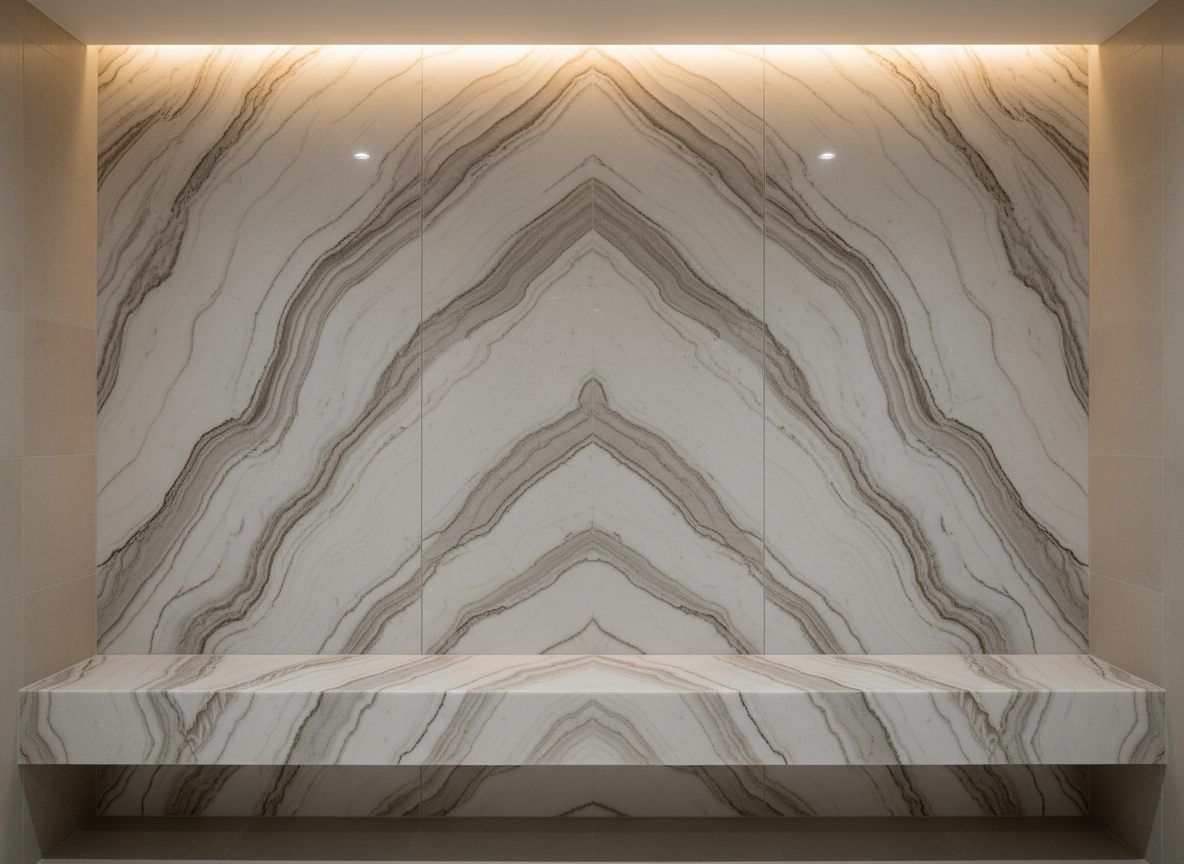
Book-matched veining. Two slabs cut in sequence can be opened like a book to create a mirrored pattern. On a back wall, this creates a stunning centerpiece. It needs slabs from the same block, so plan it before anything gets cut.
Built-in niches and benches. A recessed niche wrapped in the same slab looks far cleaner than a tiled shelf. A floating bench in matching stone adds comfort and a custom feel. Some homeowners also add a slim ledge along the back wall for shampoo bottles, which keeps the niche free for decor.
Continuous curbs and sills. Running the same material across the curb, the window sill, and the walls ties the whole shower together.
Lighting. A linear LED strip or a recessed ceiling light grazes the stone and brings the veining to life. It’s a small detail that makes slab shower walls look intentional instead of incidental.
What to Know Before You Commit
A slab shower is a different project from a tiled one, so it helps to know what’s involved.
Start with the wall structure. Natural stone and quartz are heavy, and the framing and backer board need to support them. A proper waterproofing layer behind the panels is still essential. The slab sheds water, but the system behind it keeps the wall dry.
Next, think about access. Large slabs have to travel through doors, halls, and stairwells to reach the bathroom. Your fabricator will measure that path and may plan the layout around it.
Finally, see the actual slabs in person. Photos rarely capture veining, depth, or color accurately. Seeing full slabs lets you choose the exact section for each wall. For independent background on natural stone care and selection, the Natural Stone Institute is a trusted industry resource.
Bringing It Together
Slab shower walls give you a cleaner shower, fewer grout lines to scrub, and a surface that feels like a luxury retreat every morning. Porcelain is the easiest to maintain. Quartz brings consistency, while marble and quartzite deliver natural character. The right choice depends on how you use the space and how much upkeep feels comfortable. If you’re planning a shower remodel, visit our showroom to see full slabs side by side. Our team can help you compare materials and finishes in person. Contact us to start planning.
Frequently Asked Questions
Are slab shower walls better than tile? For many homeowners, yes. Slab shower walls have far fewer joints, so there’s much less grout to clean and fewer places for mildew to form. They also create a seamless, high-end look. Tile still makes sense for tight budgets or very intricate patterns.
What is the best material for slab shower walls? Porcelain and sintered stone are the lowest-maintenance choices because they’re non-porous and never need sealing. Quartzite and marble offer natural beauty but need periodic sealing. Engineered quartz works well in standard showers with the manufacturer’s approval.
Can you use marble slabs in a shower? Yes. Marble has been used in showers for centuries. It needs sealing and gentle, pH-neutral cleaners because acidic products can etch the surface. Many homeowners love the soft patina it develops over time.
How many seams will a slab shower have? Most standard showers need one to three seams, depending on the shower size and slab dimensions. A skilled fabricator places them in corners or less visible areas so they blend in.
Do slab shower walls need sealing? It depends on the material. Porcelain, sintered stone, and engineered quartz don’t need sealing. Marble and quartzite do, usually on a routine schedule based on use and the sealer’s recommendations.