Good outdoor shower and pool bath surfaces have to do more work than almost any other material choice in the house. They face direct sun, standing water, bare feet, and in many climates a real freeze-thaw cycle, often all in the same week. Get the material wrong and you end up with a slick deck, a cracked slab, or a finish that fades within a season. Get it right, and the space reads like a resort instead of an afterthought bolted onto the pool fence.
Here’s what actually holds up outdoors, and how to choose between the materials that do.
Why Pool Baths Need Different Rules Than Indoor Bathrooms
An indoor bathroom floor almost never has to handle direct sun or freezing temperatures. A pool bath or outdoor shower handles both, plus constant splashing and bare feet moving from wet to dry. That combination rules out several materials that work perfectly well inside.
Smooth, honed stone is one of them. It looks elegant in a primary bathroom, but that same polish turns dangerous the moment it gets wet and sunny. The 2026 standard for pool decks and outdoor bath surfaces has shifted firmly toward texture: sandblasted porcelain, cleft natural stone, and other finishes built for grip rather than gloss.
Grip Comes First
[IMAGE PLACEHOLDER — texture detail] Suggested filename: slip-resistant-texture-outdoor-shower-surface.jpg Suggested alt text: “Textured, slip-resistant finish on an outdoor shower and pool bath surface”
Slip resistance now gets specified the same way tile size or color does. Two rating systems cover it: the DCOF (dynamic coefficient of friction) scale used in the U.S., and the R-rating scale used internationally. For a pool deck or outdoor shower floor, aim for a DCOF of 0.42 or higher, or an R11 rating at minimum. The immediate pool edge and shower floor benefit from R12, the higher end of that range.
A few materials deliver strong grip without added coatings. Slate carries built-in texture that often reaches R11 or R12 on its own. Tumbled travertine grips well too, once it’s given that matte, textured finish rather than a polished one. Cement tile offers a naturally matte, slightly porous surface that performs reliably in wet zones.
Porcelain vs. Natural Stone for Freeze-Thaw Climates
If your outdoor shower or pool bath sees real winters, freeze-thaw performance matters as much as grip. Large-format porcelain handles this best. It’s dense, fired at high heat, and essentially non-porous, so water has nothing to seep into and expand when it freezes. Our engineered quartz and porcelain slab options include finishes rated for this kind of year-round exterior exposure.
Natural stone can still work in cold climates, but it needs more care. Porous stone that isn’t properly sealed can crack when trapped moisture freezes and expands. Slate and granite generally handle the cycle well; softer, more porous stones need a protective sealant reapplied on a regular schedule. Our granite slab selection includes several options well suited to a pool bath vanity or bench.
Barefoot Comfort Matters More Than It Seems
A surface can pass every slip and freeze-thaw test and still be miserable to walk on. Dark, dense materials absorb heat and can run 20 to 40 degrees hotter than the surrounding air in direct sun. Light-toned porcelain and travertine stay noticeably cooler, often 15 to 25 degrees below ambient temperature.
For a pool bath or shower deck that gets full sun exposure most of the day, lean toward lighter tones even if a darker material would otherwise suit the design. In shaded or covered outdoor showers, heat matters less, which opens up more of the darker, higher-contrast options.
Putting a Pool Bath Together
A well-built pool bath usually blends a few materials rather than relying on one for everything:
- Shower and deck floor: a textured, high-DCOF porcelain or slate for the wet zone.
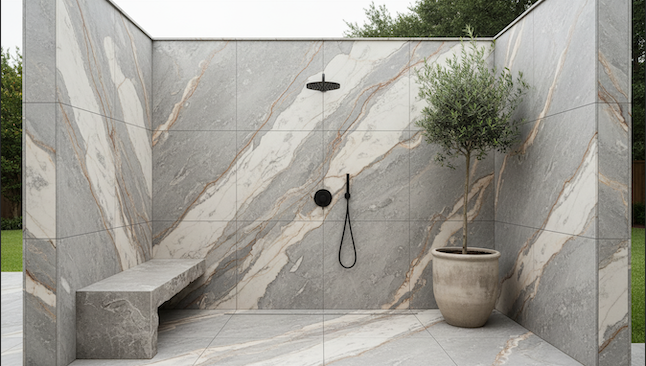
- Walls: large-format porcelain slab for a clean, low-maintenance backdrop that won’t stain from sunscreen or pool chemicals.
- Vanity or bench top: granite or sintered stone, both of which resist heat and sun without needing frequent sealing.
- Transitions: continuous flooring from the changing area into the shower, using the same material in a wet-rated finish, keeps the space feeling unified rather than pieced together.
Choosing Outdoor Shower and Pool Bath Surfaces That Last
Ask to see any candidate material in full sun and, if possible, wet. A finish that looks perfectly matte indoors under gallery lighting can behave differently under direct sunlight and standing water. Our team can walk you through slip ratings, freeze-thaw performance, and heat behavior for specific slabs before you commit to a design.
Frequently Asked Questions
What is the best flooring for an outdoor shower or pool bath? Textured, high-DCOF porcelain and slate perform best. Both offer strong slip resistance and hold up to freeze-thaw cycling, sun exposure, and constant moisture without special coatings.
Is natural stone safe to use around a pool? Yes, with the right finish. Choose a tumbled or textured finish rather than polished stone, and confirm the slip rating meets at least R11 or a DCOF of 0.42 for wet outdoor areas.
Do light or dark surfaces matter for pool decks? Yes. Dark, dense materials can run 20 to 40 degrees hotter underfoot in direct sun, while light-toned porcelain and travertine stay noticeably cooler. Full-sun areas benefit most from lighter tones.
Can I use the same material on the shower floor and pool deck? Often yes, as long as it carries an adequate slip rating for both zones. Running one material continuously from the deck into the shower creates a more unified, resort-style look.