Stone tub surround ideas can turn an ordinary bathtub into the centerpiece of a bathroom. A slab deck gives you a place for candles, bath salts, and a book. Stone walls and an apron front make the tub look built-in and permanent.
Below, we cover the main surround styles, the best materials, and the planning details that keep everything watertight.
Why Choose a Stone Tub Surround?
Tile has been the default around tubs for decades. It works, but grout lines collect soap scum and mildew. A stone tub surround cuts down on grout, and some designs eliminate it almost entirely.
Stone also does something tile can’t. It shows off large, continuous veining. A single slab wrapping a tub deck and apron looks like it was carved in place. That’s hard to fake with small-format tile.
Finally, stone gives you a durable ledge. A 3cm slab deck handles shampoo bottles, a wine glass, and a seated guest perched on the edge.
Stone Tub Surround Ideas by Tub Type
The right surround depends on the tub you choose. These stone tub surround ideas cover the most common setups.
Drop-in tub with a slab deck
A drop-in tub sits in a framed platform. The stone deck covers the platform top, and the tub’s rim rests on it or just under it. This style gives you the widest ledge and the most room for veining to show. It also lets you add a step or a seat at one end.
Undermount tub with a deck
An undermount tub hangs beneath a cut-out in the stone deck, just like an undermount kitchen sink. The stone edge is exposed at the tub opening, so you get a clean, rimless look. Ask your installer how the tub will be supported. The stone shouldn’t carry the weight of a full tub.
Alcove tub with slab walls
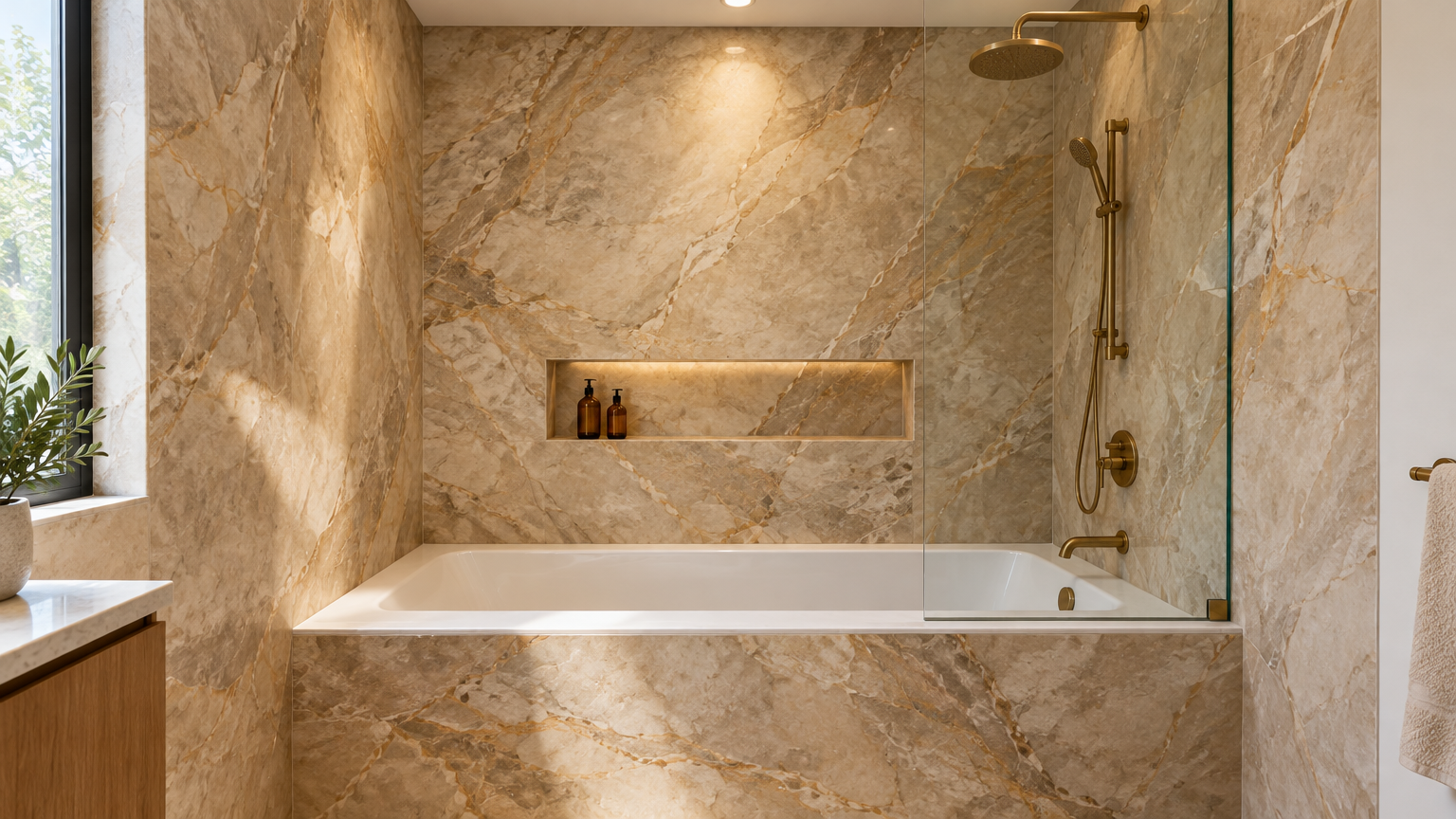
[IMAGE PLACEHOLDER — in-body image, place directly under this H3] Suggested filename: stone-tub-surround-alcove-quartzite-slab-walls.jpg Suggested alt text: “Alcove stone tub surround with grout-free quartzite slab walls and a recessed niche” Suggested caption: “Floor-to-ceiling slab panels replace tile around an alcove tub for a grout-free finish.” AI image prompt:
Photorealistic interior photograph of a modern bathroom alcove with a white built-in bathtub. All three walls around the tub are clad floor-to-ceiling in large warm-toned quartzite slab panels with soft taupe, cream, and honey veining, with nearly invisible seams and no grout lines. A recessed horizontal niche cut into the back wall, lined in the same stone, holds two amber glass bottles. A matching quartzite apron front covers the tub’s side. Brushed brass shower and tub fixtures, a glass half-panel at the open side, soft warm overhead light mixed with daylight. Eye-level shot facing into the alcove, 28mm lens, clean editorial home-design style, sharp detail on the stone texture. No people, no text, no logos, no brand names. Aspect ratio 4:3.
Alcove tubs sit between three walls and often double as a shower. Replacing wall tile with large stone slabs creates a nearly grout-free enclosure. It’s the same idea behind slab shower walls, and it brings the same easy cleaning.
A recessed niche lined in matching stone keeps bottles off the tub edge. Plan its location before the walls go up.
Apron-front tubs
An apron covers the exposed side of an alcove or platform tub. In stone, it can match the deck, the walls, or both. Mitering the apron to the deck edge creates a thick, solid look.
Freestanding tub with a stone feature wall
Freestanding tubs don’t need a deck, but they still benefit from stone. A full-height slab wall behind the tub acts as a backdrop. Add a matching stone floor pad underneath to frame the tub and protect the floor from splashes.
Best Materials for a Stone Tub Surround
Bathrooms combine water, heat, humidity, and cosmetic products. Here’s how the main materials handle that mix, so you can match your stone tub surround ideas to the right slab.
Marble. The classic choice for a reason. Nothing beats marble’s glow in soft bathroom light. Keep in mind that bath oils, bath bombs, and acidic cleaners can etch it. A honed finish hides wear better than a polished one.
Quartzite. Harder and less reactive than marble, with similar natural veining. It still needs sealing. Be aware that some stones sold as quartzite are actually dolomite, which behaves more like marble. Our dolomite vs. quartzite post explains how to tell them apart.
Quartz (engineered stone). Non-porous, low-maintenance, and consistent. It’s a practical pick for kids’ baths and busy households. Check the brand’s guidance before using quartz near a window that gets strong direct sun.
Porcelain and sintered stone. Large porcelain panels are lightweight, non-porous, and nearly impossible to stain. They’re ideal for tub walls, where weight and water resistance matter most.
Granite. Durable and forgiving, with a huge range of colors. A sealed granite deck can last as long as the house.
Planning a whole-home look? Our post on matching kitchen and bathroom countertops shows how to carry one stone through several rooms.
Planning Details That Keep Water Out
The most beautiful stone tub surround ideas fail if water gets behind the stone. These details matter.
- Waterproof first. Stone isn’t a waterproofing layer. The walls and platform need a proper membrane behind the stone. Your installer and the tub manufacturer will specify the system.
- Slope the deck slightly. A gentle pitch toward the tub keeps water from pooling on the deck.
- Seal the joints with care. The joint between tub and stone needs a flexible sealant, not grout. Inspect and refresh it over time.
- Plan seams thoughtfully. Long decks and tall walls may need seams. Place them where they’re least visible and well supported. Our post on countertop seams explains what to expect.
- Include an access panel. Tub plumbing eventually needs service. A removable panel, often on an adjacent wall or in a closet, saves you from cutting stone later.
- Choose the right thickness. A 3cm slab is common for decks. Thinner slabs or porcelain panels are often used on walls to reduce weight.
The Natural Stone Institute publishes installation and care standards that many installers follow for wet areas.
Bringing Your Stone Tub Surround Ideas to Life
Start with the tub, then pick from the stone tub surround ideas that suit it. Choose a material for how you’ll use the room, not just how it looks on day one. With smart waterproofing and a skilled installer, a stone tub surround will look as good in twenty years as it does on the first soak.
Want to see slabs big enough to wrap a tub? Contact our team to schedule a showroom visit. We’ll help you find the right stone for your deck, walls, and apron.
Frequently Asked Questions
What is the best stone for a tub surround? Porcelain and quartz are the lowest maintenance because they’re non-porous. Marble and quartzite offer the most striking natural veining but need sealing and gentler cleaners.
Can you use marble around a bathtub? Yes. Marble is a classic tub surround material. Choose a honed finish, seal it regularly, and avoid acidic cleaners and bath products that can etch it.
Is a stone tub surround waterproof? The stone itself isn’t a waterproofing system. A membrane behind the stone keeps water out of the walls and framing.
How thick should a stone tub deck be? A 3cm slab is the most common choice for decks. Walls often use thinner slabs or porcelain panels to reduce weight.
Do stone tub surround ideas work for small bathrooms? Yes. Large slabs mean fewer grout lines, which makes a small bathroom feel calmer and more open. A light stone with soft veining works especially well.